
FDA-Compliant Seals for Food Processing: Selecting the Right Material and Design
A seal in food processing equipment must do more than prevent leaks. It must perform reliably while exposed to food ingredients, repeated cleaning, changing temperatures, and equipment movement. Selecting a suitable food-contact material is an essential starting point, but the seal’s design must also fit the application.
At American High Performance Seals, we develop sealing solutions for food processing and dispensing equipment by considering the product being processed, the equipment’s operating conditions, and the cleaning procedures together. This procedure helps manufacturers address the sealing problem rather than simply replace a worn component.
What Types of Seals Are Used in Food Processing?
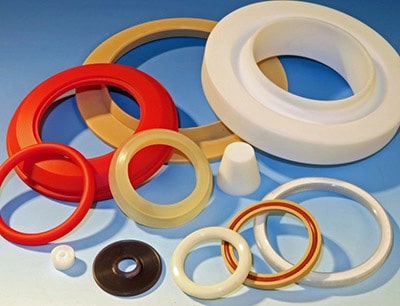
Food processing equipment does not use one universal seal type. Rotary shaft seals help contain media around rotating shafts, while rod and piston seals accommodate reciprocating movement. Static seals provide sealing between components that remain stationary relative to one another.
The right design depends on where the seal operates and what it must withstand. A seal handling dry flavorings faces different challenges from one used in a liquid dispensing system or high-pressure processing application. Material selection and seal geometry must work together to meet those demands.
The shaft deserves equal attention. Some stainless steel shafts can develop grooves when seal contact pressure, abrasive media, and operating conditions combine unfavorably. Simply installing a harder or tighter seal may exacerbate the underlying problem.
Cleaning introduces another set of demands. A seal may encounter acidic ingredients during production and caustic solutions during sanitation. The material must tolerate both exposures while maintaining the flexibility and sealing force needed for operation. These conditions make food processing seal design a balance of wear resistance, chemical compatibility, hardware protection, and cleanability.
Selecting Seal Materials for Food Contact Applications
Choosing seal materials matched to operating conditions and media involves more than checking a temperature rating. Engineers must also evaluate chemical compatibility, abrasion, friction, and resistance to deformation under pressure.
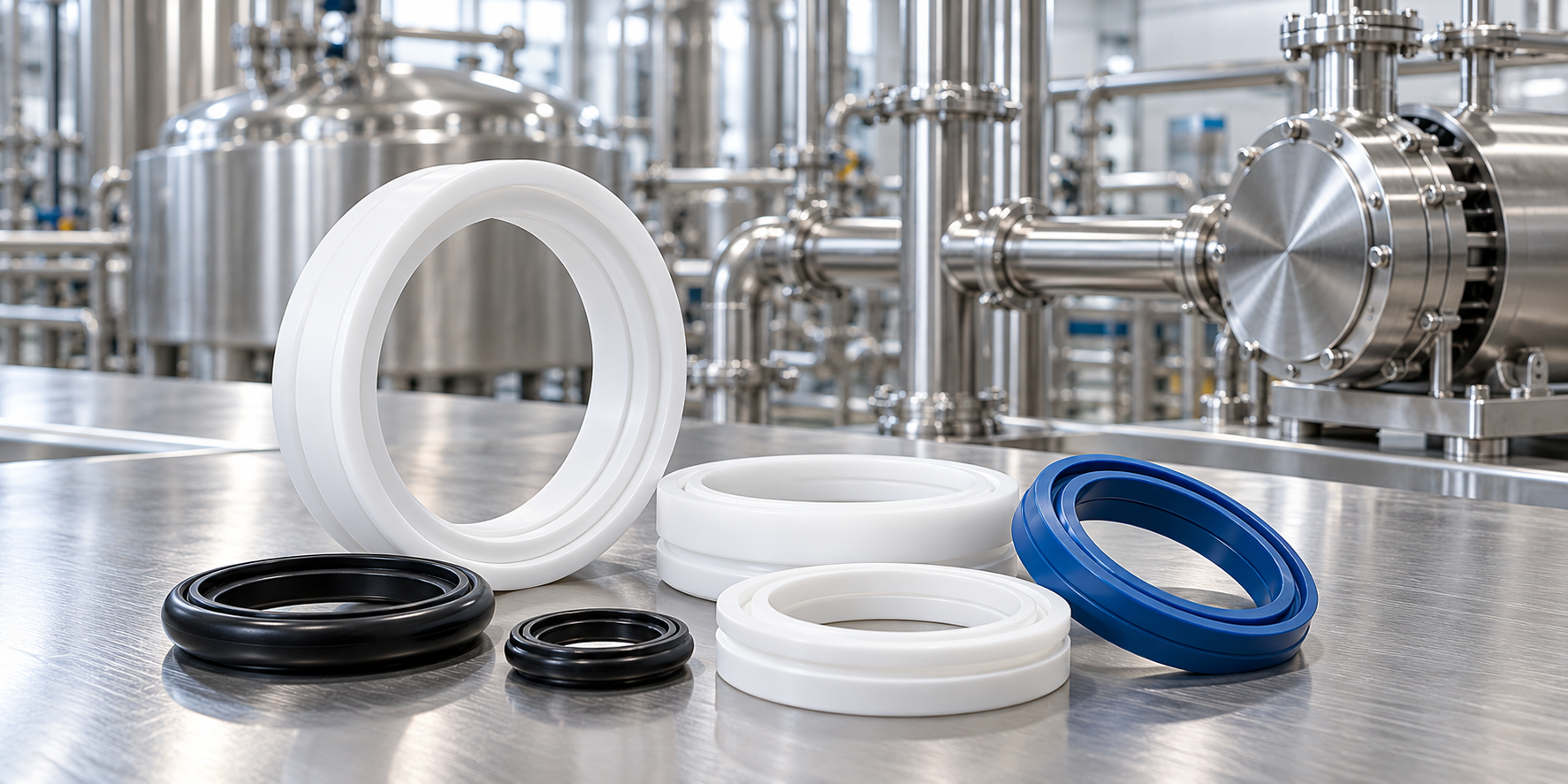
American High Performance Seals’ material options for food applications include FDA high-performance polyurethanes, virgin PTFE, Permachem™ Filled PTFE’s , FDA compliant Rubbers Nbr, EPDM, FKM, and proprietary Duralast™ and Duraloy™ materials. Consider PTFE seals when low friction and chemical resistance are priorities. While other materials may better suit applications calling for elasticity or abrasion resistance. The appropriate choice depends on the specific compound, seal configuration, and operating environment.
For FDA compliant seals, evaluate food contact suitability for the exact material and intended use. A general material name alone does not establish suitability for every food product, temperature, or cleaning procedure.
Designing Seals for Cleaning and Sanitation
An FDA seal that performs well during production must also withstand the equipment’s cleaning cycle. Clean-in-place, or CIP, systems are used where regular disassembly is not possible and expose components to sanitizing solutions comprising caustic, acid, and rinse water. Other equipment uses clean-out-of-place, or COP, procedures, while some applications require sterilization-in-place, or SIP.
American High Performance Seals develops food-contact seal designs suitable for these methods where the application requires them. Selection must account for the actual cleaning chemicals, temperatures, and exposure conditions.
Material compatibility is only part of the task. Seal geometry should support effective cleaning and limit areas where product residue can collect. Do not assume a food-contact material prevents bacterial growth; hygienic design and effective sanitation remain essential.
For equipment exposed to aggressive cleaning solutions, chemical-resistant seals designed for the fluids encountered can help address chemical attack and premature material aging.
Duralast 4331 for Demanding Food Processing Applications
Duralast 4331 is one of American High Performance Seals’ specialized seal materials for food processing. The seals are resistance to abrasion, CIP fluids, and diluted acids and alkalis found in food processing environments. Properties include:
- Abrasion resistance when handling materials such as dry flavorings and salts.
- Elongation greater than 300%, providing flexibility that can assist installation.
- Low compression set, helping maintain sealing force over time.
- Low swelling, particularly in mineral oils and fatty food products.
- Suitability for seal designs addressing high pressure or larger extrusion gaps.
These characteristics make Duralast 4331 a seal material worth evaluating for demanding applications. Final selection should include a review of the current material specifications, food-contact documentation, and the equipment’s production and cleaning conditions.
Custom Seal Design Services for Food Processing Equipment
Recurring leakage or premature wear may indicate that the existing seal material or geometry does not match the application. Repeatedly replacing the same component can leave that mismatch unresolved.
American High Performance Seals provides custom seal design services for specific equipment requirements, including assistance with material selection, seal geometry, and hardware or housing design. This allows the engineering team to consider the sealing system as a whole.
Useful application details include the food product being handled, operating temperature and pressure, shaft speed or stroke movement, installation dimensions, and cleaning procedures. Information about previous failures can also help identify opportunities to improve seal reliability.
Call the American High Performance Seals engineering team today at (800) 283-7140, or submit your food processing requirement here – Request Quote.
FAQs – FDA Compliant Seal Manufacturing
Q: What types of seals are used in food processing equipment?
A: Depending on the equipment, food processing applications may require rotary shaft seals, rod seals, piston seals, or static seals. The selection depends on component movement, pressure, temperature, the product being handled, and cleaning requirements.
Q: Is a food-contact material enough to ensure reliable seal performance?
A: No. The material must also withstand the application’s mechanical and chemical conditions. Seal geometry, shaft condition, installation dimensions, and cleaning procedures all affect performance.
Q: Are PTFE seals suitable for food processing?
A: Appropriate PTFE grades may be suitable for food processing applications, particularly where low friction and chemical resistance are needed. The exact grade and design must be evaluated for the intended food contact and operating conditions.
Q: Why do cleaning chemicals affect seal selection?
A: Cleaning chemicals can cause incompatible materials to swell, harden, or lose sealing performance. Most importantly, the seal material must resist leaching due to the cleaning chemicals. Selection should account for the chemical type, concentration, cleaning temperature, and exposure time.
Q: What is Duralast 4331?
A: Duralast 4331 is an AHP seal material described as offering abrasion resistance, flexibility, low compression set, and resistance to certain food processing and cleaning fluids. Its suitability should be confirmed against the requirements of the specific application.
Q: What information does AHP need to evaluate a food processing seal?
A: Provide equipment dimensions, the product being sealed, temperature, pressure, movement or shaft speed, and cleaning procedures. Details about leakage, wear, or previous seal failures can help the engineering team evaluate the problem.